
Research Publications AI in Education
Check out our research publications on AI in Education.
- Implementation
Generative AI in K-12 Classrooms: A Midyear Implementation Report
This mid-year report summarizes teacher use of Colleague AI across 12 Washington State school districts from September 1 to December 31, 2025. Produced jointly by Colleague AI and AmplifyLearn.AI at the University of Washington, this report aggregates platform data and district-provided administrative records to provide an early look at how teachers engaged with AI during the first half of the 2025-26 school year. The districts vary in size from small districts with a few thousand students to large districts with up to thirty thousand students. The districts are rural, suburban, and urban. Only a subset of districts were able to provide mid-year administrative data, and findings that link teachers’ use of Colleague AI to student characteristics should be interpreted as preliminary signals.
From Voices to Validity: Leveraging Large Language Models (LLMs) for Textual Analysis of Policy Stakeholder Interviews
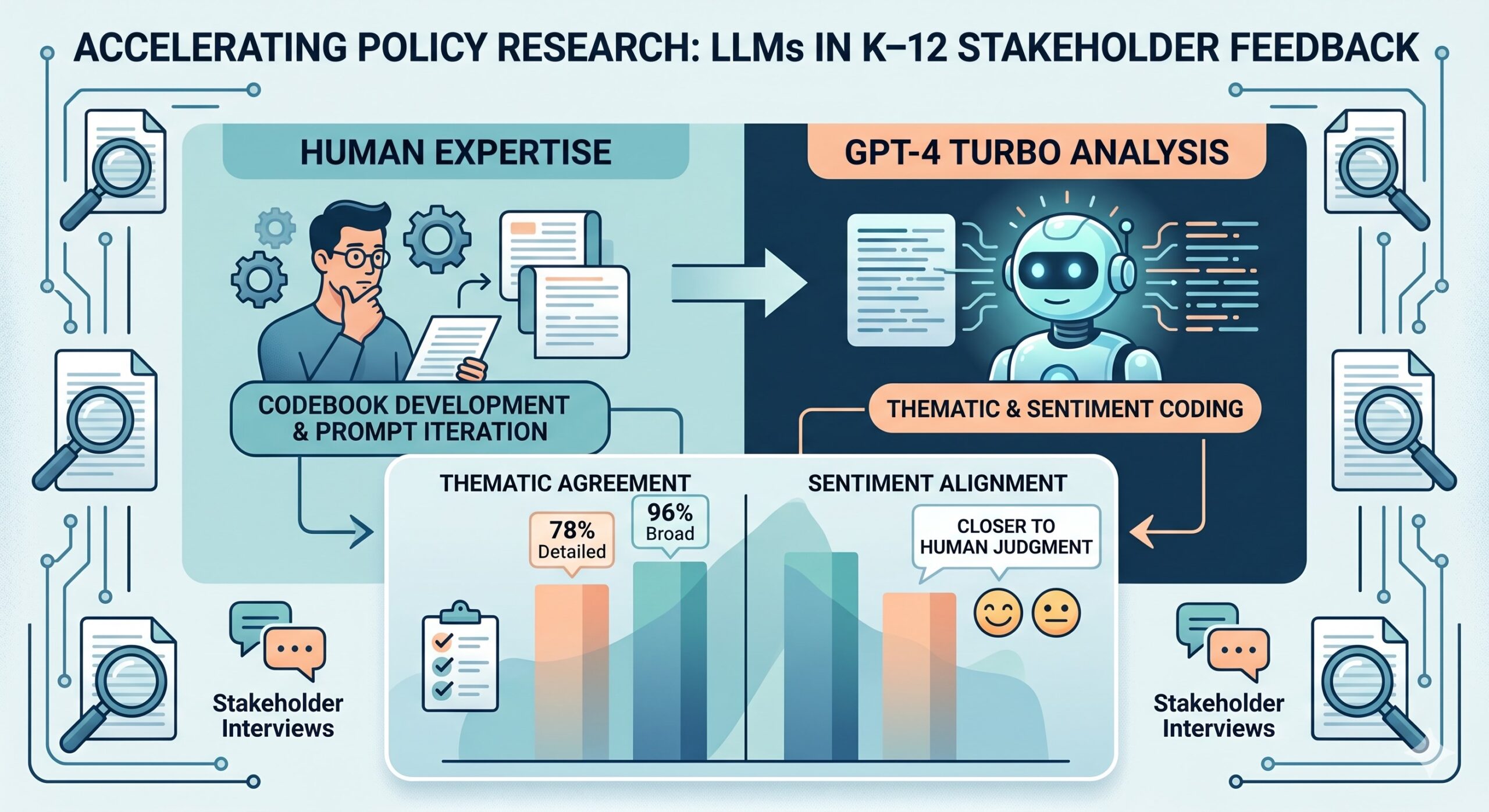
Stakeholder feedback is essential for policymakers to evaluate and develop effective policies, but traditional qualitative analysis methods are often labor-intensive and time-consuming. This study investigates the use of Large Language Models (LLMs) like GPT-4 Turbo (GPT-4) with human expertise to analyze stakeholder interviews regarding K–12 education policy in a U.S. state. The research employed a mixed-methods approach where human experts developed a codebook and iterative prompts for GPT-4 to conduct thematic and sentiment analysis. Results demonstrated that GPT-4’s thematic coding achieved 78% agreement with human coding at detailed levels and 96% alignment for broader themes, exceeding traditional Natural Language Processing methods by over 25%. GPT-4 also produced sentiment analysis results more closely aligned with a human expert’s judgment. Our qualitative comparisons between human and GPT-4 analysis results highlight the complementary roles of human expertise and LLMs in enhancing efficiency, validity, and interpretability of educational policy research.
- Product Effectiveness
Collaborative and Adaptive Learning: Designing Ai Educational Systems With and for Educators
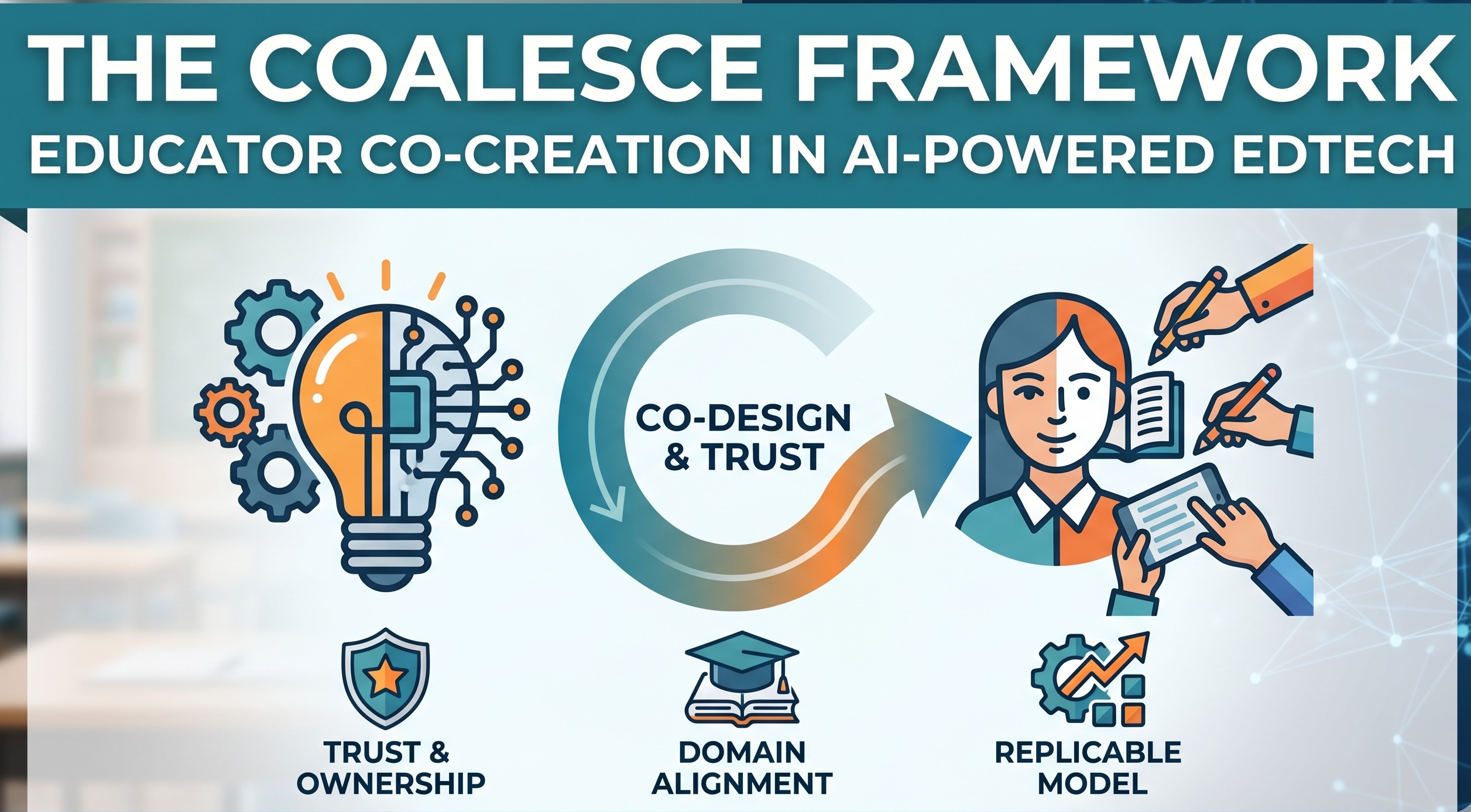
The COALESCE framework extends DBIR principles to AI-powered educational technology development, positioning educators as active co-creators. This study evaluates COALESCE through its application in designing an AI-assisted lesson-planning tool. Our findings show how deep educator involvement supports trust, ownership, and domain-specific improvements in AI-generated content. We discuss implications for participatory AI design and offer a replicable model for context-aware, educator-aligned innovation.
- Implementation, Product Effectiveness
Implementation Considerations for Automated AI Grading of Student Work
This study examined how 21 K-12 teachers implemented AI-powered grading tools in their classrooms, finding that while teachers valued AI-generated narrative feedback for formative assessment, they emphasized the need for human oversight to maintain pedagogical coherence and student trust in automated grading.
- Trend Analysis
Emerging Patterns of GenAI Use in K–12 Science and Mathematics Education
This report presents findings from a nationally representative survey of US public school math and science teachers examining their generative AI adoption, classroom use, perceptions of student learning impacts, and institutional support needs as educators navigate rapidly evolving AI integration pressures.
- AI/ML Models, Product Effectiveness
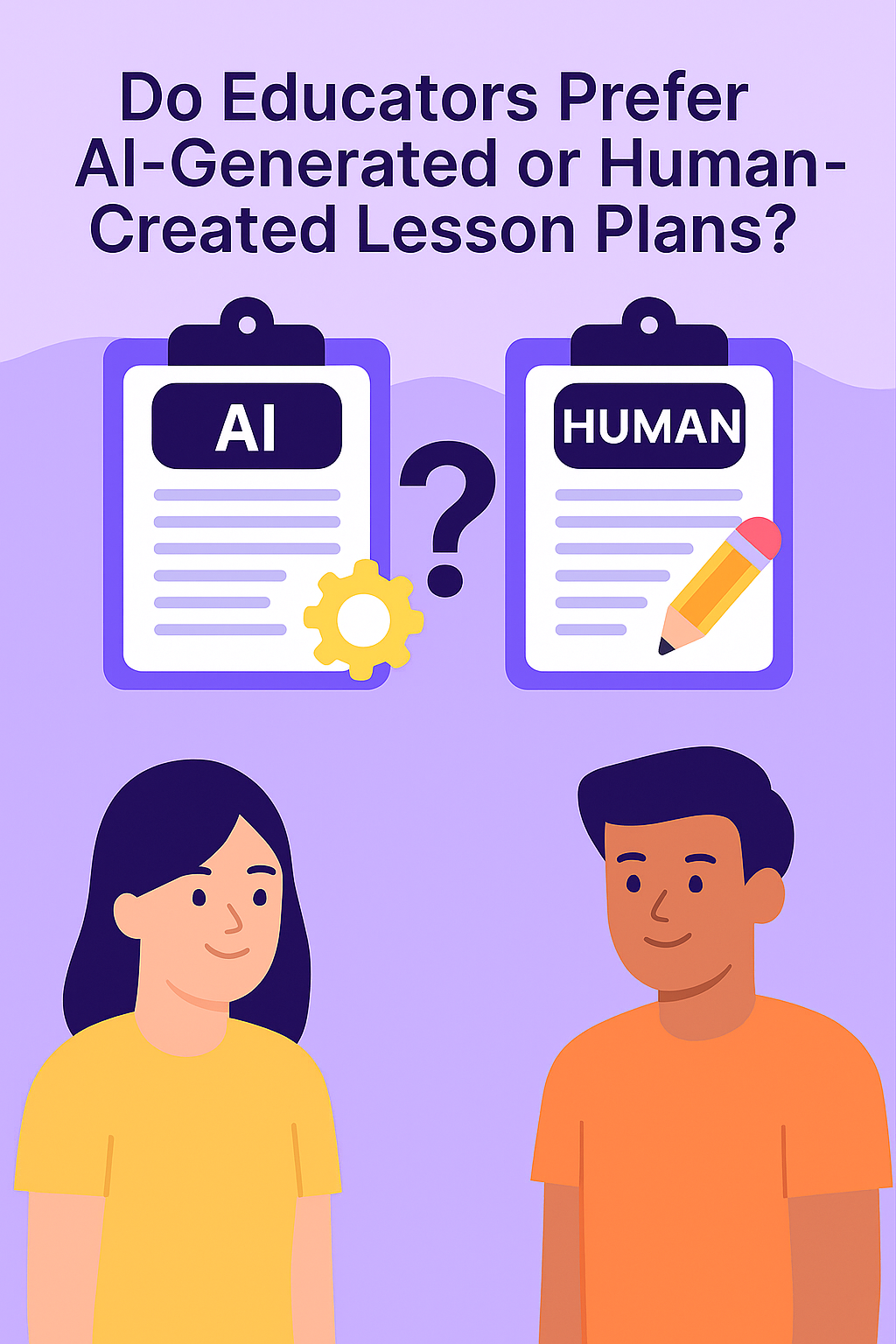
Connecting Feedback to Choice: Understanding Educator Preferences in GenAI vs. Human-Created Lesson Plans in K-12 Education
This study investigates K–12 educators’ preferences for lesson plans created by humans versus AI models. Surveying math teachers across grade levels, the research compares components like warm-ups, main tasks, and cool-downs. While human-authored plans are generally favored—especially in elementary grades—AI-generated lessons perform well in structured tasks like cool-downs, particularly in high school. Teachers value the adaptability of AI but rely on human expertise for differentiation and student discourse. The findings support a collaborative approach where GenAI serves as a planning assistant, not a replacement.
- Product Effectiveness
Rubric Generation in Colleague AI: Transforming Assessment in Education
This article introduces Colleague AI’s Rubric Generation tool, which automates the creation of standards-aligned rubrics to enhance K–12 assessment. While leveraging AI to streamline routine tasks, the platform preserves teacher control and support learning needs, empowering educators to focus on meaningful instruction and student growth.
- Implementation
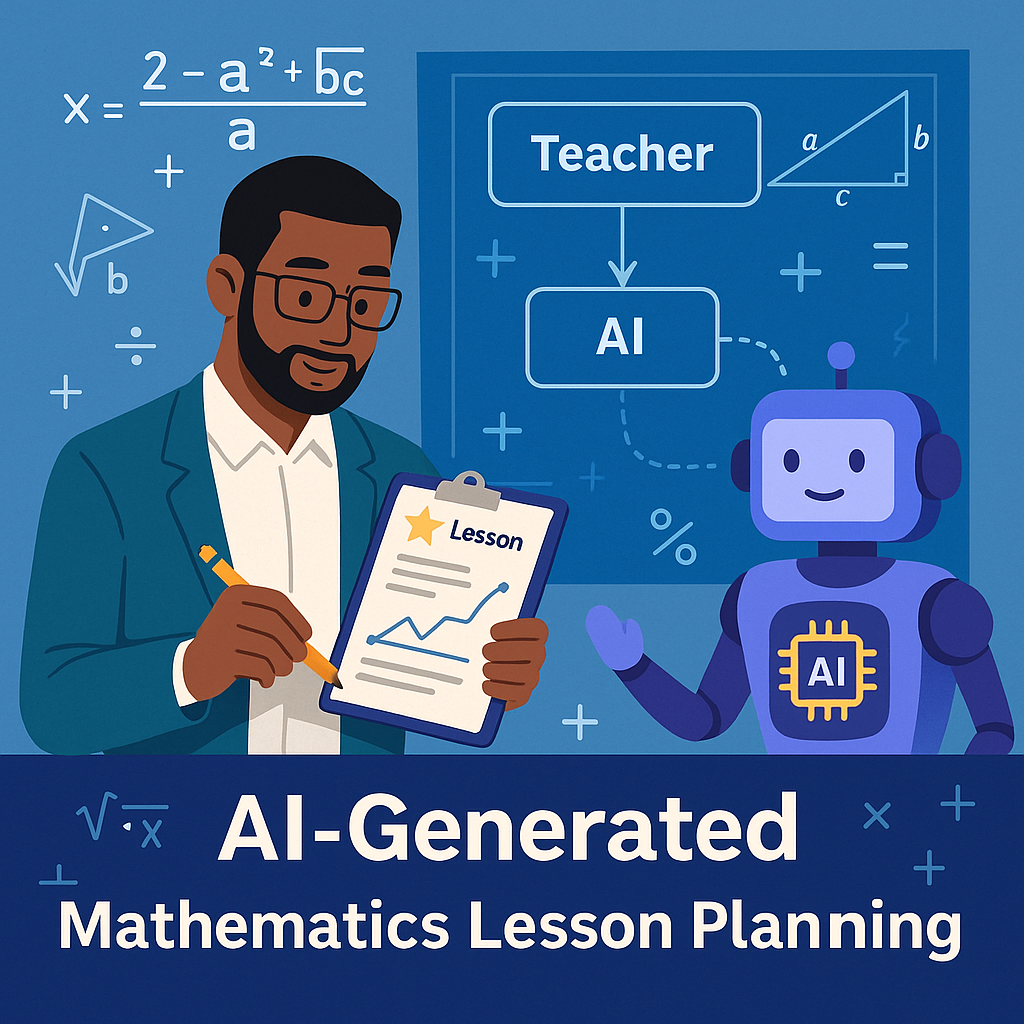
Beyond Algorithms: Professional Knowledge in AI-Powered Mathematics Teaching
The paper argues for the essential role of mathematics educators’ professional expertise in human-centered approach to plan high-quality, ambitious mathematics instruction utilizing AI-powered tools.
- Implementation
Empowering Teachers as AI Architects: The COALESCE Framework for Educational Technology Design
This paper argues that transforming educators from passive users to active co-creators in AI educational tool development, through the COALESCE framework, leads to more effective and contextually relevant technology solutions, as demonstrated through a comprehensive study with K-12 mathematics teachers that showed significant improvements in lesson planning efficiency and technology adoption rates.

- AI/ML Models, Trend Analysis
Instructional improvement: leveraging computer-assisted textual analysis to generate insights from educational artifacts
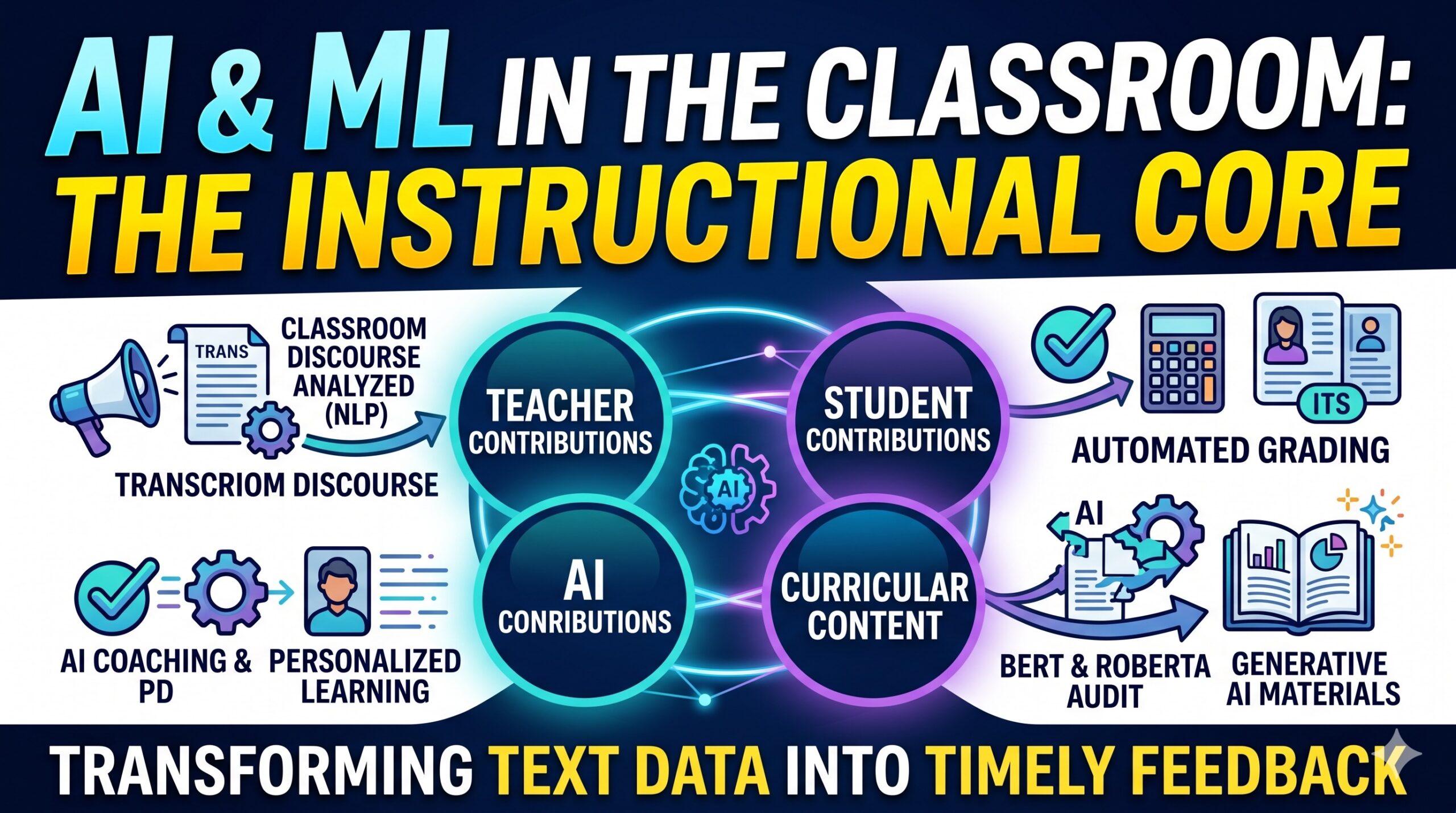
Traditional classroom observation methods are often too labor-intensive to provide timely feedback for instructional improvement. This chapter explores how artificial intelligence and machine learning (AI/ML) can analyze educational text artifacts like transcripts, lesson plans, and assignments with scalability and precision. Using the Instructional Core Framework, the authors review how natural language processing and generative AI support teachers through automated coaching and discourse analysis, assist students via automated grading and intelligent tutoring, and enhance content by evaluating and generating high-quality learning materials. The chapter concludes by outlining a future of human-centered AI partnerships that amplify human creativity and leverage inclusive datasets to build an equitable educational ecosystem.
- Product Effectiveness
Adapting to Educate: Conversational AI’s Role in Mathematics Education Across Different Educational Contexts
This study examines conversational AI’s adaptability in K-12 math education contexts. Educators seek AI guidance on assessment, cognitive demand, and real-world connections, with needs varying by context. While AI can provide relevant information when contexts are explicit, its ability to consistently adapt across educational settings remains limited, requiring further development.